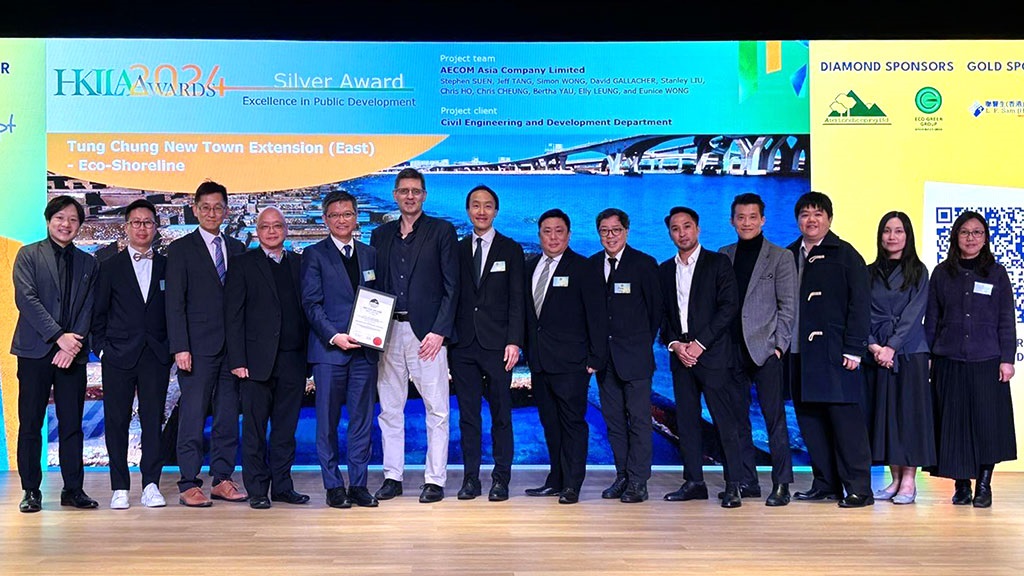
Tung Chung New Town Extension - Eco-shoreline at Tung Chung East was awarded The Hong Kong Institute of Landscape Architects Awards 2024 - Silver Award
Date of Award: 07/03/2025
We were honoured that the Eco-shoreline at Tung Chung East project of Tung Chung New Town Extension (TCNTE) was awarded Silver Award in the Hong Kong Institute of Landscape Architects Awards 2024.
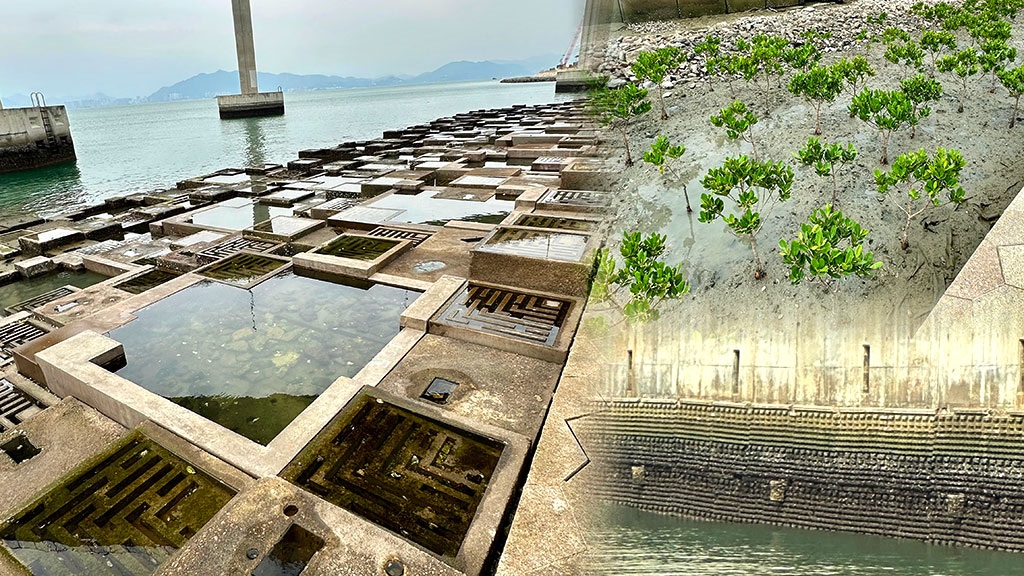
Tung Chung New Town Extension (TCNTE) Reclamation is the first public works project to introduce eco-shorelines. The main objective is to incorporate a design that mimics the natural intertidal zone as far as practicable, so as to provide a suitable habitat for the growth of marine organisms to form a tidal ecosystem. Taking into account the various environmental factors in the vicinity of the shoreline, such as salinity of the water body, whether the location will be subject to wave impacts and whether there is sufficient sunlight, etc., three types of eco-shorelines, namely mangrove eco-shoreline, rocky eco-shoreline and vertical eco-shoreline are provided at suitable locations along the newly constructed seawalls.
The mangrove eco-shoreline is set in the sheltered intertidal zone near stormwater outlet. Mangroves have high ecological value, not only greening the environment, and prevent waves from hitting or eroding the coastline, they offer food for many invertebrates and fish. The rocky eco-shoreline is set in some locations that are more affected by waves. When the tide rises, the sea water can cover the bio-blocks. When the tide recedes, there is enough sea water stored in the bio-blocks to form a tidal pool, providing a suitable habitat for marine species, thereby improving biodiversity. The vertical eco-shoreline is set on the vertical seawall. In order to provide shelter and habitat for marine life and plants, ecological blocks with holes and pottery plates will also be set up here, and their uneven surface will allow small organisms to attach and grow more easily.
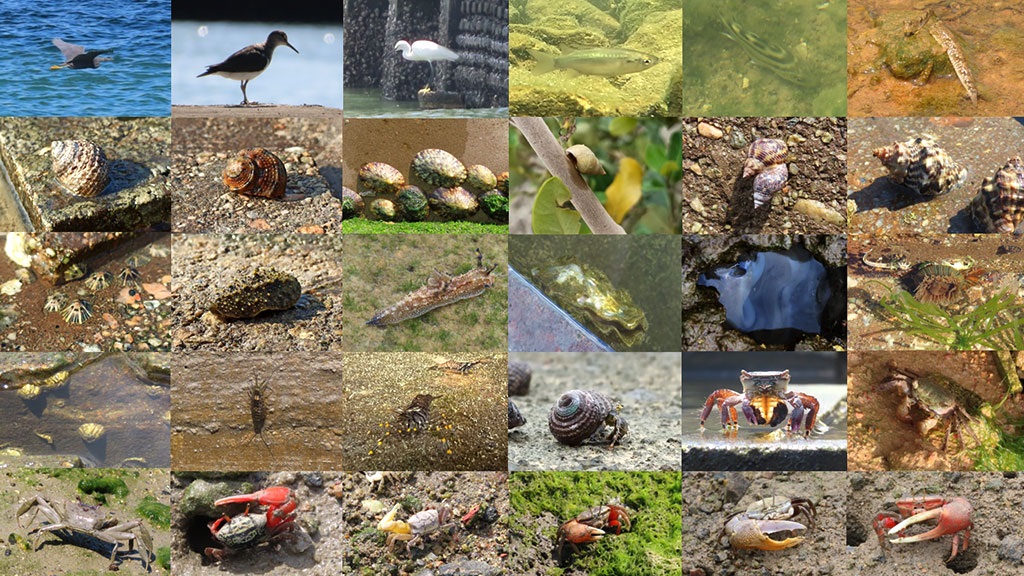
At the approximately 3.8km long eco-shoreline, we have already discovered over 100 different species of marine life. The results are very encouraging.